Why We Chose Épée
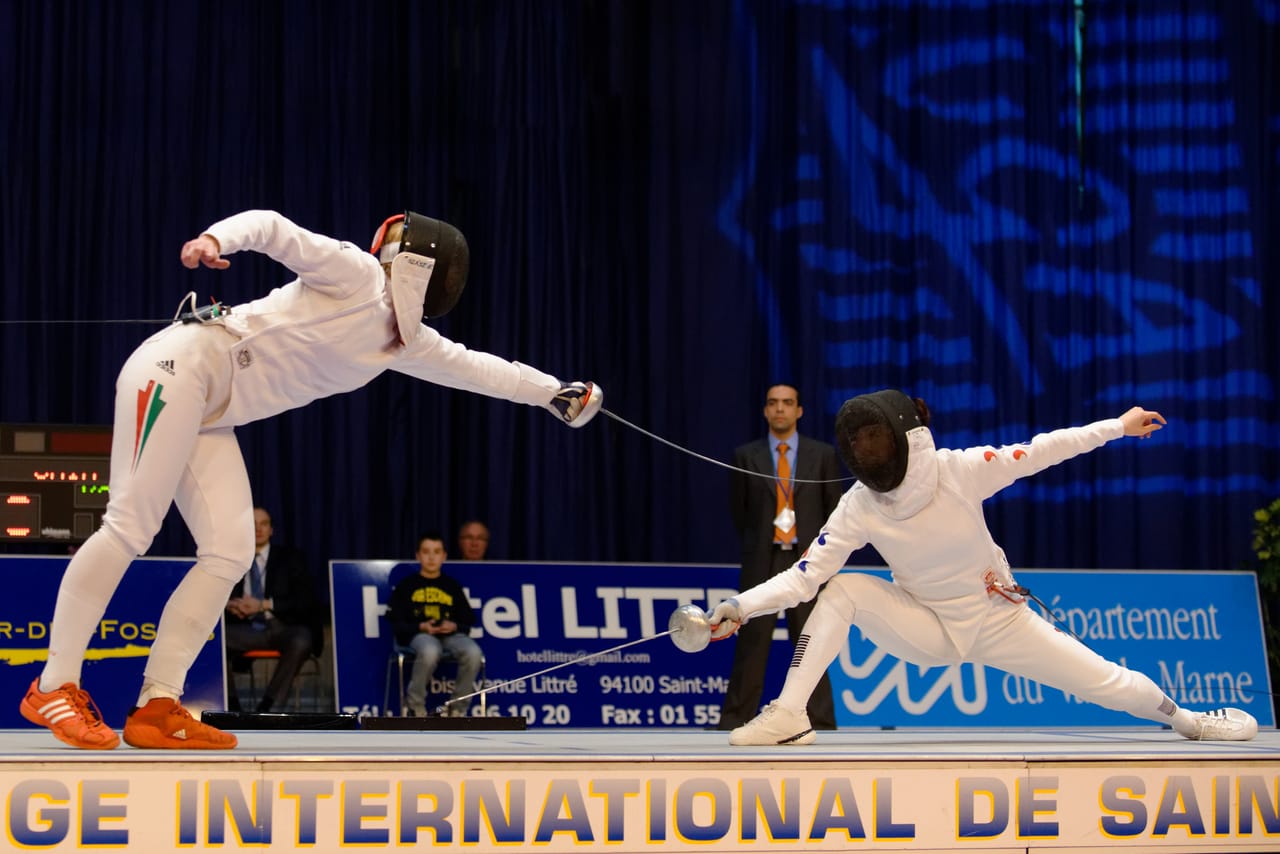
In fencing, there are three weapons: foil, saber, and épée. Most clubs teach all three, spreading their coaching expertise thin across different rule sets, different techniques, different philosophies. At NCF Boulder, we made a different choice.
We focus exclusively on épée.
Not because it's easier - it's not. Not because it's faster - saber holds that title. We chose épée because it's the purest form of fencing, the deepest strategic challenge, and the weapon that best develops the mental skills that transfer to life beyond the strip.
The Fairest Weapon
Here's what makes épée unique: the entire body is a valid target, and there are no "right-of-way" rules. In foil and saber, referees must interpret who attacked first, who had priority, who established the "phrase." These calls are subjective. They can go either way. Athletes sometimes win or lose based on interpretations rather than touches.
In épée, none of that exists.
You hit, you score. First touch wins. If both fencers hit simultaneously, both score. There's no referee interpretation, no priority disputes, no arguing about who "should have" gotten the point. The scoring box lights up, and the truth is self-evident.
For parents concerned about fairness in youth sports - about politics, favoritism, or arbitrary judging - épée offers something rare: pure objectivity. Your child wins or loses based entirely on what happens on the strip, not on how a referee saw it.
This is why we call it "The Gamer's Weapon." Kids who grow up with video games understand this logic intuitively. Hit detection is binary. You either landed the touch or you didn't. There's no arguing with the machine.
Physical Chess
Épée is often called "physical chess," and the analogy runs deep.
In foil and saber, the restricted target area (torso only for foil, waist-up for saber) creates a faster, more aggressive game. The right-of-way rules reward attacking. The exchanges are brief and explosive.
Épée rewards patience. Strategy. Reading your opponent over minutes, not seconds.
Because the entire body is a target, épée fencers must defend everything while searching for openings anywhere. The hand becomes a target - so does the foot, the shoulder, the kneecap. This vastly expands the tactical space. Where foil fencers think in terms of torso attacks, épée fencers think in terms of the entire human geometry.
The result is a thinking game. Pattern recognition. Prediction. Counter-timing. Setting traps three moves deep. The same cognitive skills that drive success in chess, poker, and competitive programming apply directly to épée. Many of our most successful young fencers are also strong in math, coding, and strategic games - not because we select for those traits, but because épée develops them.
The College Advantage
Here's a statistic that matters: 64% of college fencing recruitment is concentrated in épée.
Why? Partly because épée is the most popular weapon globally and produces the deepest talent pool. But also because épée fencers tend to have characteristics that college coaches value: patience, strategic thinking, the ability to perform under pressure without referee variability.
With only 29 NCAA Division I fencing programs competing for talented athletes, college recruitment in fencing is already favorable compared to major sports. But within fencing, épée offers the best odds.
At NCF Boulder, we don't just teach épée - we prepare athletes for the college recruitment process. Our Advanced athletes receive direct support: fencing resume development, recruiting timelines, and connections to college coaches. We've mapped the pathway from Boulder to the Ivy League, and we walk it with every serious athlete who commits to the journey.
Specialists Beat Generalists. That's Why We Chose Épée.
Most clubs teach all three weapons because it maximizes revenue per square foot. More weapons means more class offerings means more tuition. The coaching staff gets spread thin - a foil coach teaching épée, an épée coach teaching saber, nobody going truly deep on anything.
We took the opposite approach.
By focusing exclusively on épée, NCF Boulder's entire coaching infrastructure points in one direction. Our head coach, Gary Copeland - USOC Coach of the Year, 20+ times US National Team coach - specializes in épée. Our lesson plans, our drills, our mental curriculum, our competition preparation: all optimized for one weapon.
The result is depth instead of breadth. Expertise instead of generalism. A boutique academy that develops épée specialists rather than a factory that produces adequate fencers in three weapons.
This is what "Center of Épée Excellence" means. Not a marketing slogan - a structural commitment to doing one thing exceptionally well.
Why Not Foil or Saber?
Parents sometimes ask why we don't at least offer foil for beginners - it's lighter, after all, and many clubs start there.
Our answer: we believe in starting with depth.
Foil teaches certain habits that don't transfer to épée (and vice versa). The target areas differ, the timing differs, the mental approach differs. Athletes who start in foil and switch to épée later often spend months unlearning foil instincts.
More importantly, we believe young athletes benefit from going deep rather than sampling. Specialization builds mastery. Mastery builds confidence. Confidence built through deep practice transfers to everything else - academics, careers, life.
If your child wants to try three weapons before committing, Denver Fencing Center offers that experience 30 minutes away. We respect that choice. But if you've decided that fencing is the path - and that you want your child trained by specialists rather than generalists - NCF Boulder exists for exactly that purpose.
The Bottom Line
Épée is not for everyone. It rewards patience over aggression, strategy over athleticism, precision over power. It asks athletes to think three moves ahead while staying grounded in the present moment.
But for the right athlete - the strategic thinker, the puzzle solver, the kid who loves chess or coding or games - épée is the perfect sport. And NCF Boulder is the place to learn it.
We chose épée. We specialize in épée. We develop épée fencers who compete at the highest levels and go on to fence in college.
That's the difference.