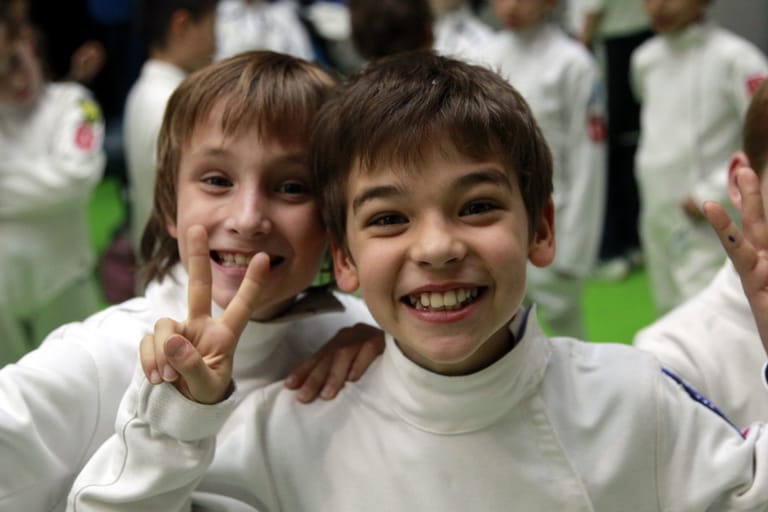
Physical Chess for Kids Who Think Differently.
Your child loves chess, video games, and puzzles. They see patterns others miss. Team sports never clicked. Too much chaos, too much waiting. They don't need to fit in. They need to fence.
All equipment provided. No experience necessary. ADHD-friendly.
Is Your Child a Natural Fencer?
Not every kid is a team sport kid. That's a feature, not a bug.
Your child might be a natural fencer if they:
- ✓ Love chess, strategy games, or complex video games
- ✓ Get bored or frustrated in team sports
- ✓ Think quickly and see patterns others miss
- ✓ Have high energy that needs a focused outlet
- ✓ Prefer individual accountability to team pressure
If three or more apply, . Fencing might be the sport they've been waiting for.
Why Strategic Kids Thrive Here
Physical chess. Mental training. Zero concussions.
The ADHD Advantage
Fencing is built for ADHD brains: short, intense bursts of focus. Immediate feedback. Mind-body coordination that channels restless energy into precision. No standing around waiting for your turn.
Parents consistently report improved focus in school after their children start fencing. It's not a coincidence. It's the curriculum.
The Introvert's Sport
One-on-one competition without team pressure. Progress at your own pace without letting teammates down. A supportive community of fellow strategic thinkers, without the social overwhelm of team dynamics.
Many of our best athletes came to us because team sports felt exhausting. They found their people here.
The Gifted Mind's Playground
Pattern recognition. Real-time decision-making. Psychological analysis of opponents. The strategic depth keeps brilliant minds engaged. No "checking out" because it's too easy.
Same mental challenge as strategy games, but physical. The perfect bridge from gaming to real-world competition.
Why Fencing Over Other Activities?
Boulder has plenty of options. Here's why strategic families choose fencing.
Climbing Doesn't Get You Into College
Climbing is great for problem-solving and physical confidence. But climbing isn't an NCAA sport. There's no college pathway, no recruitment advantage, no athletic credential on applications.
Fencing offers the same mental engagement plus competitive experience under pressure, emotional regulation training, and a direct pathway to 45 NCAA programs (29 at the Division I level). The college participation rate for fencers is 30-38%, versus 0% for climbing.
If your child has aged out of climbing or wants structure and competition, fencing is the natural next step.
All the Discipline of Martial Arts. None of the Concussions.
Martial arts teach discipline. So does fencing. But fencing offers lower injury rates with no sparring contact and no concussions, non-violent strategic competition rather than physical aggression, and an actual college pathway with 45 NCAA programs (29 D1) versus zero for martial arts. You get the same character benefits: focus, respect, discipline, emotional regulation.
Same discipline. Better safety profile. Actual college pathway.
vs. Team Sports
Some kids thrive in team environments. Others feel the pressure of letting teammates down, dread tryouts, or don't fit the "athletic kid" mold. Fencing offers individual accountability where your success depends on you alone. Progress at your own pace. No bench time, no being cut from the team. Strategic depth that keeps smart kids engaged. Community without the pressure of performing for the group.
Perfect for introverts, strategic thinkers, and kids who've bounced off soccer and basketball.
The Pathway
Three stages. Clear progression. Skills that last a lifetime.
Stage-Not-Age Advancement
We evaluate students based on demonstrated readiness, not calendar age. Skill determines advancement, not birthday, not time enrolled. The gifted 6-year-old who's ready moves forward; the 10-year-old who needs more time gets it.
Foundations
New fencers building fundamental skills
- ✓ Grip, stance, and footwork fundamentals
- ✓ Basic attack and defense patterns
- ✓ Focus, listening, and emotional regulation
- ✓ ADHD-friendly structure: short drills, immediate feedback, zero bench time
2x per week (1 private + 1 group) · All equipment provided
Training
Tactical refinement and competition introduction
- ✓ Tactical pattern recognition: the "chess" of fencing
- ✓ Bout strategy and distance management
- ✓ Mental game fundamentals and opponent analysis
- ✓ Local tournament preparation
3x per week (1 private + 2 group)
Advanced
Competition-focused, college recruitment track
- ✓ Advanced tactical combinations and adaptation
- ✓ Pressure management and mental performance
- ✓ College recruitment preparation and resume building
- ✓ NACs, Junior Olympics, and NCAA pathway
4x per week (2 private + 2 group)
What Parents Say
"My son has ADHD. Soccer was chaos. Basketball was overwhelming. Swimming was boring. Then we found fencing. For the first time, he comes home focused instead of frazzled. His teachers have noticed the difference. This is the sport his brain was built for."
Rachel M.
Superior, CO
"Our daughter was 'too smart' for team sports. She'd get bored, check out, or overcomplicate things. Fencing finally gives her brain something to chew on. The strategic depth keeps her engaged. She actually looks forward to practice."
David L.
Louisville, CO
"We tried climbing, we tried swimming, we researched every activity. When I saw the college statistics (30% vs. 7%), fencing became the obvious choice. Three years later, our son is training for JOs and talking to D1 coaches."
Jennifer K.
Boulder, CO
Frequently Asked Questions
Is fencing safe for my child?
Fencing is one of the safest youth sports, with lower injury rates than soccer, basketball, football, and even swimming. Athletes wear full protective gear: mask, jacket, glove, and underarm protector. There's no contact violence, no sparring injuries, and no concussion risk. Our coaches are SafeSport certified.
Is fencing good for kids with ADHD?
Often, yes. Fencing is built for the ADHD brain: short, intense focus bursts with no standing around waiting. Immediate feedback on every action. High engagement with mind and body working together. Clear structure with defined rules and expectations. Many parents report improved focus in school after their children start fencing.
My child is introverted. Will they like fencing?
Many of our most successful athletes are introverts. Fencing is an individual sport. Your child competes one-on-one, progresses at their own pace, and never worries about letting teammates down. The community is supportive but not overwhelming. If your child finds team sports exhausting, fencing might be the first sport that fits.
What equipment do we need to buy?
Nothing to start. NCF Boulder provides all equipment for Foundations athletes. Once your child advances to Training level, we recommend personal equipment. We'll advise on appropriate purchases when the time comes.
How does this compare to climbing?
Climbing and fencing both develop problem-solving and focus. The key difference: fencing offers a direct NCAA pathway. 30-38% of high school fencers compete in college. Climbing is not an NCAA sport. If college athletics matter to your family, fencing offers tangible credential value that climbing cannot.
Ready to See If Your Child Is a Natural Fencer?
Your first lesson is free. All equipment provided. No experience necessary. Just an honest conversation about whether fencing is the right fit.